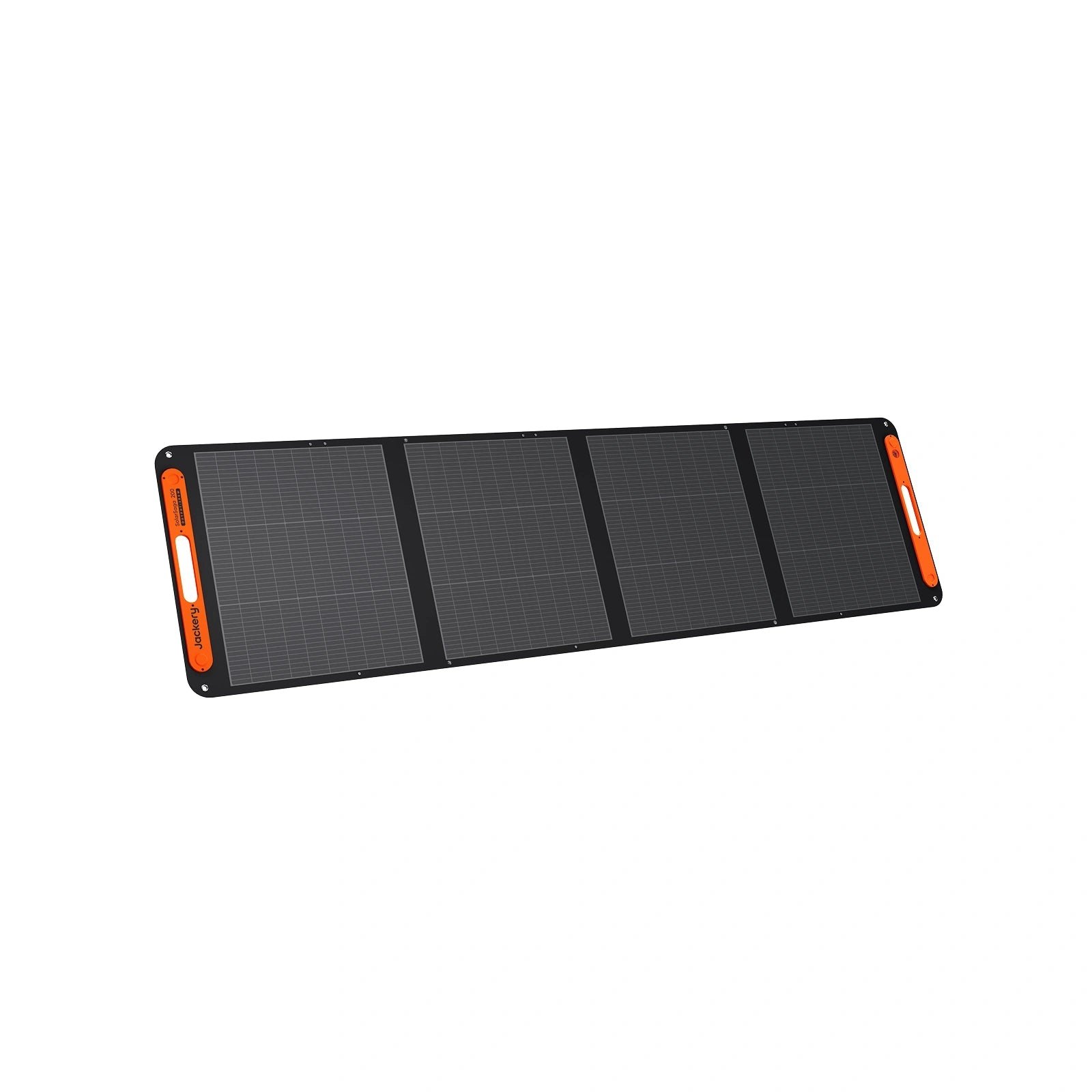
Best overall
Jackery SolarSaga 200W
200 W · 14.33 lb · IP68
$379 $429
Price checked Aug 26, 2026
Folding folios are how you put serious watt-hours back into a station before sunset. Hard briefcase kits are how a smaller array stays standing when the wind has opinions. This is a comparison of shapes, not models, and we’ll tell you plainly why one column has no product names in it.
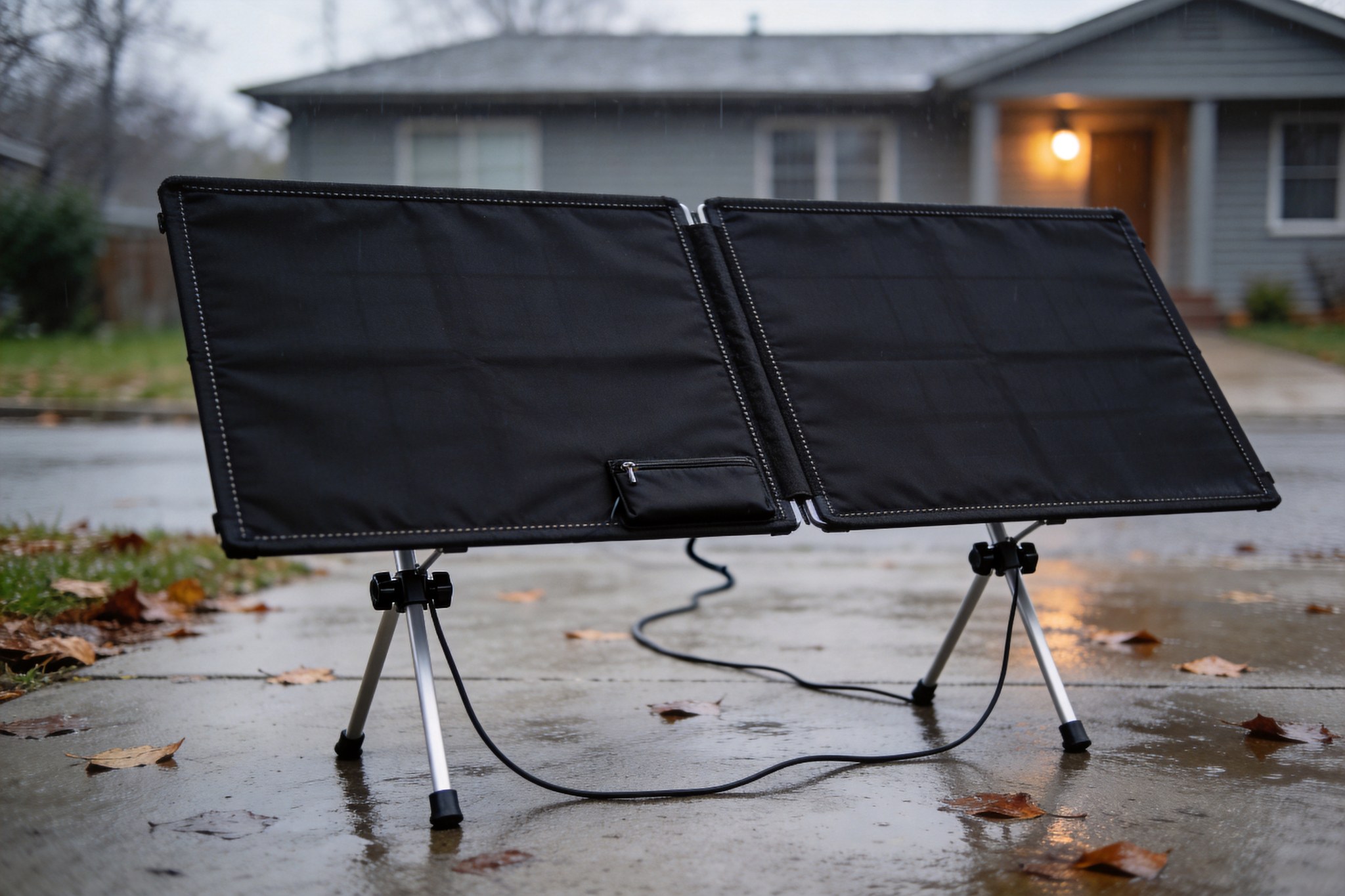

Let’s set expectations warmly and immediately: two shapes get compared here, and zero briefcase models get named. Ranked kits live on the panels worth unfolding. This page ranks formats. If you arrived wanting a winner with a price tag, that link has three. If you arrived because a folio cartwheeled across the driveway last spring and you’re wondering whether a hard case would have held its ground, pour a coffee. You’re in the right place.
The folding side of the table is well-stocked: the Jackery SolarSaga 200W, the BLUETTI SP200L, and the Anker SOLIX PS400, all with the makers’ own photos and dated figures. The briefcase side is a shape without a name, because no manufacturer has handed us a clean official photo and a dated sheet for one. Our house rule is simple: no photo, no card, no exceptions. The shape still deserves an honest description, so here it is.
3 models in this category
200 W · 14.33 lb · IP68
$379 $429
Price checked Aug 26, 2026
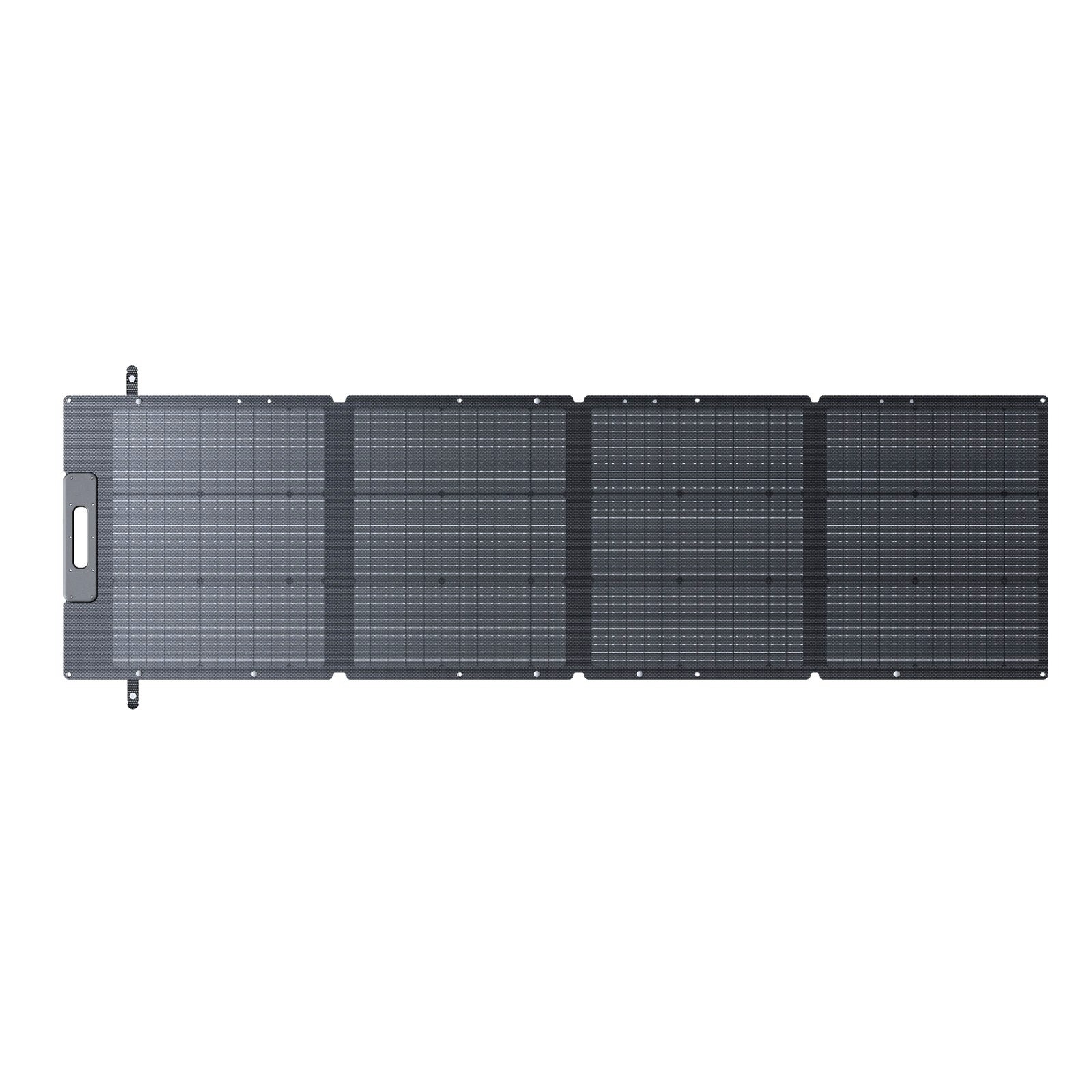
200 W · 17.15 lb · 24.6 V
$399
Price checked Aug 26, 2026
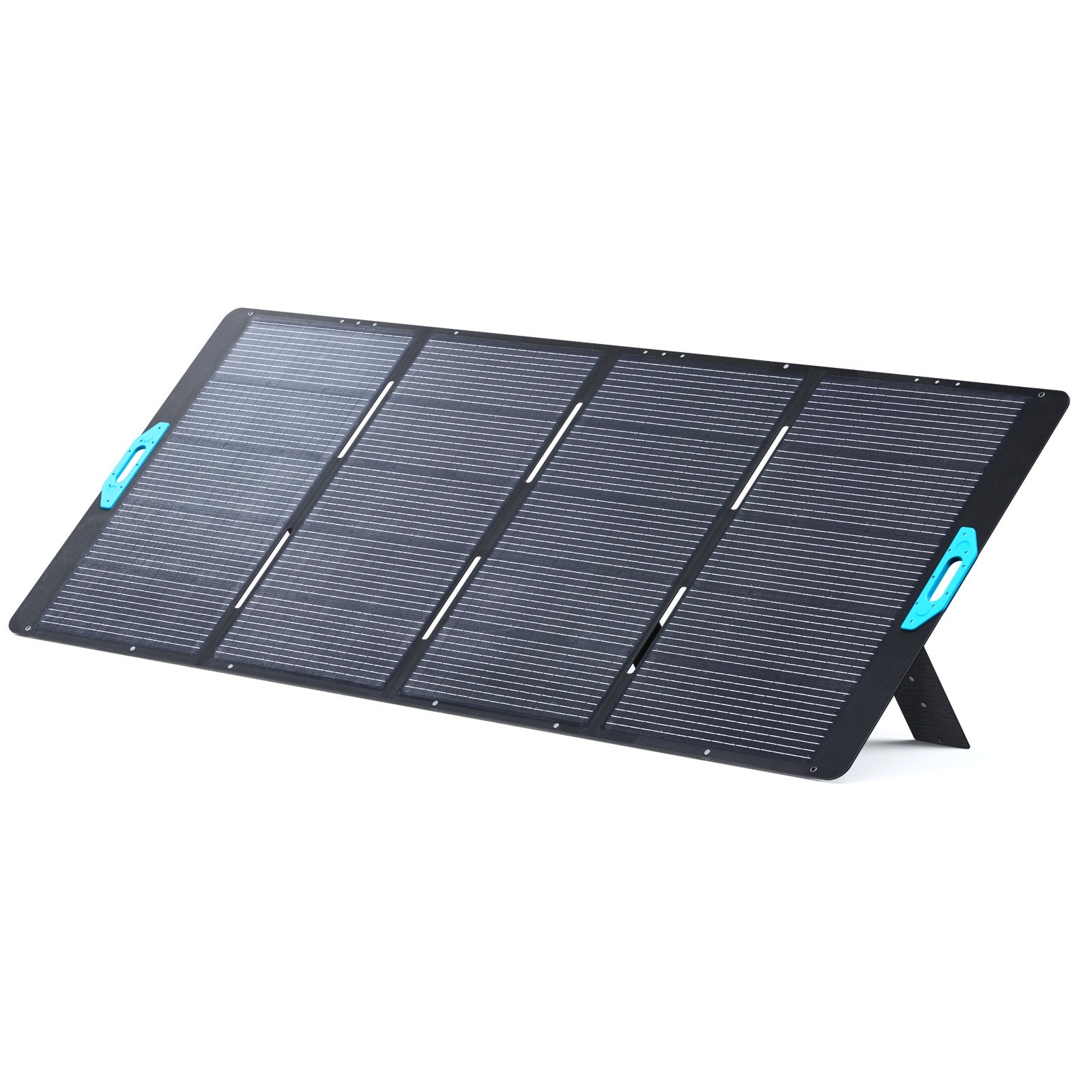
400 W · 35.3 lb · IP67
$699.99
Price checked Aug 26, 2026
Product photographs are the manufacturers’ own studio shots, used as supplied. Specifications and prices come from their US product pages, checked August 26, 2026.
A folding panel is a folio of solar cells with fabric hinges, a handle, and kickstands: unclip, fan out the leaves, prop, aim. Packed, it slides flat into a trunk. Deployed, it’s a modest sail, and that trade is the entire format. It’s why 200 to 400 watts fits in one carry, and why a gusty afternoon keeps you glancing out the window.
The three, as listed on August 26, 2026: Jackery’s SolarSaga 200W is the featherweight at 14.33 pounds, sealed to IP68, $379 that day ($429 listed). BLUETTI’s SP200L is 17.15 pounds at $399, with the category’s one plainly printed voltage (24.6 V) and a sealing rating the page never states cleanly. Anker’s PS400 is the big one: 400 watts, 35.3 pounds, IP67, $699.99. Voltage is a dash on the SolarSaga and the PS400, because neither maker’s pages settle on a figure, and we don’t settle for them. Those three are the folding shelf, and none of them is a briefcase.
A hard briefcase kit is two rigid leaves that open like a laptop and stand as their own triangle. The case is the kickstand, which is the format’s whole charm. Packed, it’s a latched rectangle with luggage manners: stackable, sturdy, indifferent to being leaned against a picnic table by someone’s enthusiastic nephew. The usual price of that toughness is fewer watts per carry than a four-leaf folio.
We won’t pin a brand, wattage, or price on “the briefcase” as if we had a model in the catalog. If a maker someday provides the clean photo and dated sheet our shelf requires, it can earn a card like everything else. Until then, treat the briefcase as a shape you might sensibly buy elsewhere, after the same voltage homework this site always assigns, because physics doesn’t care what the case looks like.
| Folding folio | Briefcase (hard case) | |
|---|---|---|
| Watts per trip | 200 W (SolarSaga, SP200L) or 400 W (PS400) in one carry | Usually a smaller array, and we won’t invent its number |
| Setup | Unfold, kickstand, aim, with more fabric for the wind to consider | Open the lid. It’s already a triangle |
| Packed shape | Flat folio, trunk-friendly, easy to stack wrong | Rigid and latched, stackable, heavier for the watts |
| Wind | Kickstands skate and leaves catch gusts, so you babysit | Lower profile, less sail, steadier, and still not a ground-mount |
| Home-backup role | The default refill for the stations we name | The harsh-site trickle, if slower recharge is a fair trade |
| On our shelf | Three named panels, official photos | No named model. No clean photo, no card |
Here’s the failure mode no wattage sticker mentions: the person. A folio that demands ten minutes of fussing gets left in the garage after its second gust. A briefcase that aims itself the moment the latches open is still out there earning at 2 p.m. That’s no judgment of anyone’s character. It’s simply why format changes how many watt-hours a real day delivers, and that belongs in the decision.
For home backup on a supervised driveway, folding usually wins. The mission is meaningful watt-hours into a two-night tank before sunset, and the SolarSaga and SP200L are sized for exactly that when the sun cooperates. The PS400 runs the same mission with more glass and a 35.3-pound reminder that “portable” is a spectrum. The briefcase shape earns its consideration at the campsite, the windy beach, or the yard where kids and dogs would make short work of fabric hinges. Anywhere survivability outranks speed.
The voltage reminder, since it never gets old: the SolarSaga 200W and the PS400 carry a dash where their voltage should be, because the makers’ pages never agree, while the SP200L prints 24.6 V plainly. No shape waives that homework, and the buying guide makes it painless.
Rooftop arrays stay out of scope. EcoFlow makes both shapes, and neither is featured here (7-day affiliate window). The shops we do link: Jackery, BLUETTI, and Anker SOLIX. The arrangement: disclosure.
The fit line. A supervised driveway and a tank to fill says folding, so pick from SolarSaga 200W, SP200L, or PS400. A site that eats hinges says briefcase, researched with your own eyes open. Either way, the category is portable solar panels, and the kettle’s always on.