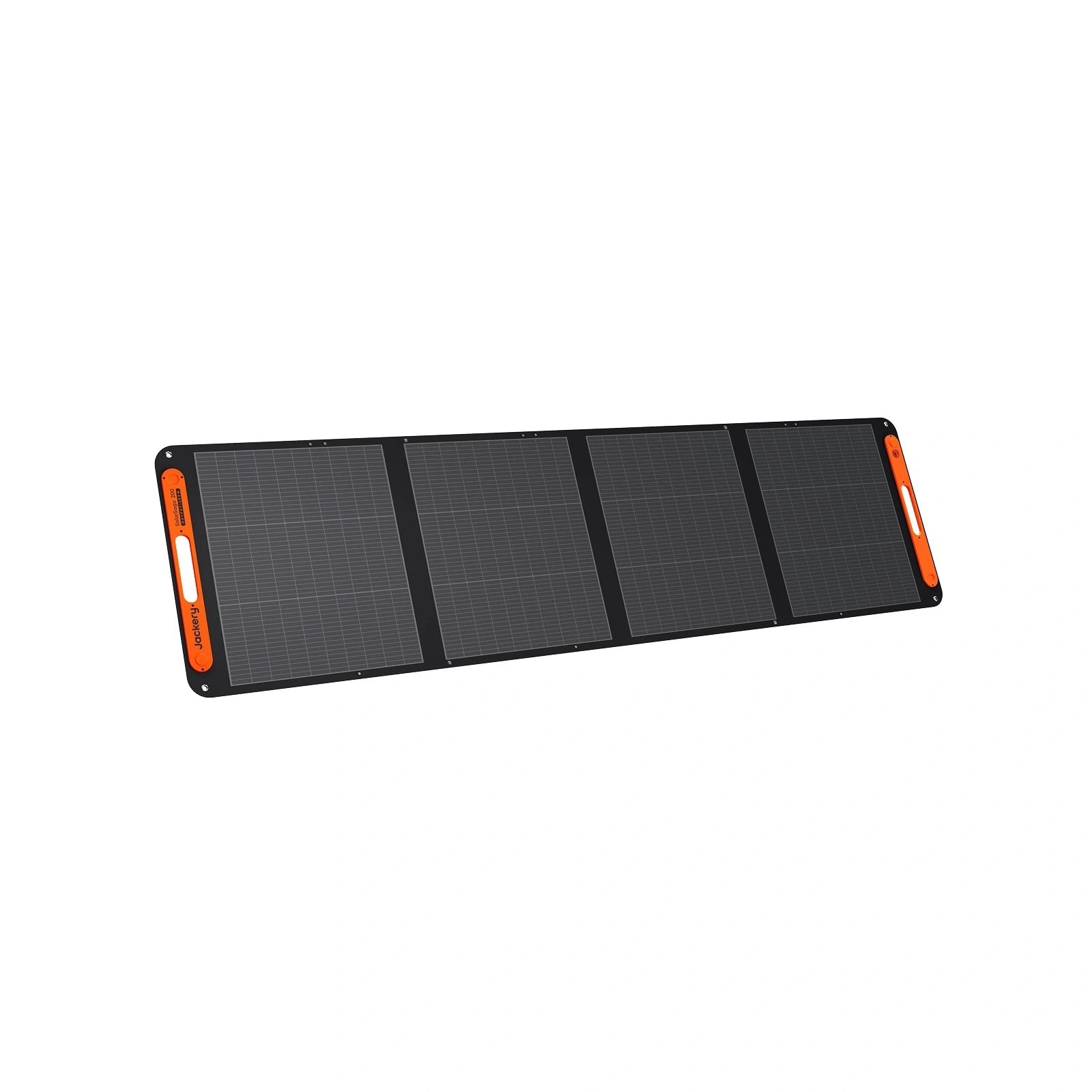
Best overall
Jackery SolarSaga 200W
200 W · 14.33 lb · IP68
$379 $429
Price checked Aug 26, 2026
The best portable panel isn’t the one with the biggest sticker. It’s the one your station will accept at noon without a voltage argument, carried by somebody who’ll actually make the trip. Three folders earn that bar here, one per family, each matched to the station it was built to refill.

Three panels, ranked by fit rather than wattage. In this category buyers don’t lose money on watts. They lose it on open-circuit voltage, orphaned connectors, and a 35-pound folio that never once leaves the garage. This is a folding-panel list for the stations we name. Roofs live elsewhere, and the briefcase shape (no clean official photo exists in our catalog, so no model gets named) has its own honest format guide.
The golden rule is pleasantly boring: matching beats mixing. A SolarSaga cable into a Jackery input, an SP200L into a BLUETTI, a PS400 into an Anker. Each pair was designed together, voltage and all. Cross-brand adapters exist, and not one of them excuses skipping the station’s voltage ceiling.
3 models in this category
200 W · 14.33 lb · IP68
$379 $429
Price checked Aug 26, 2026
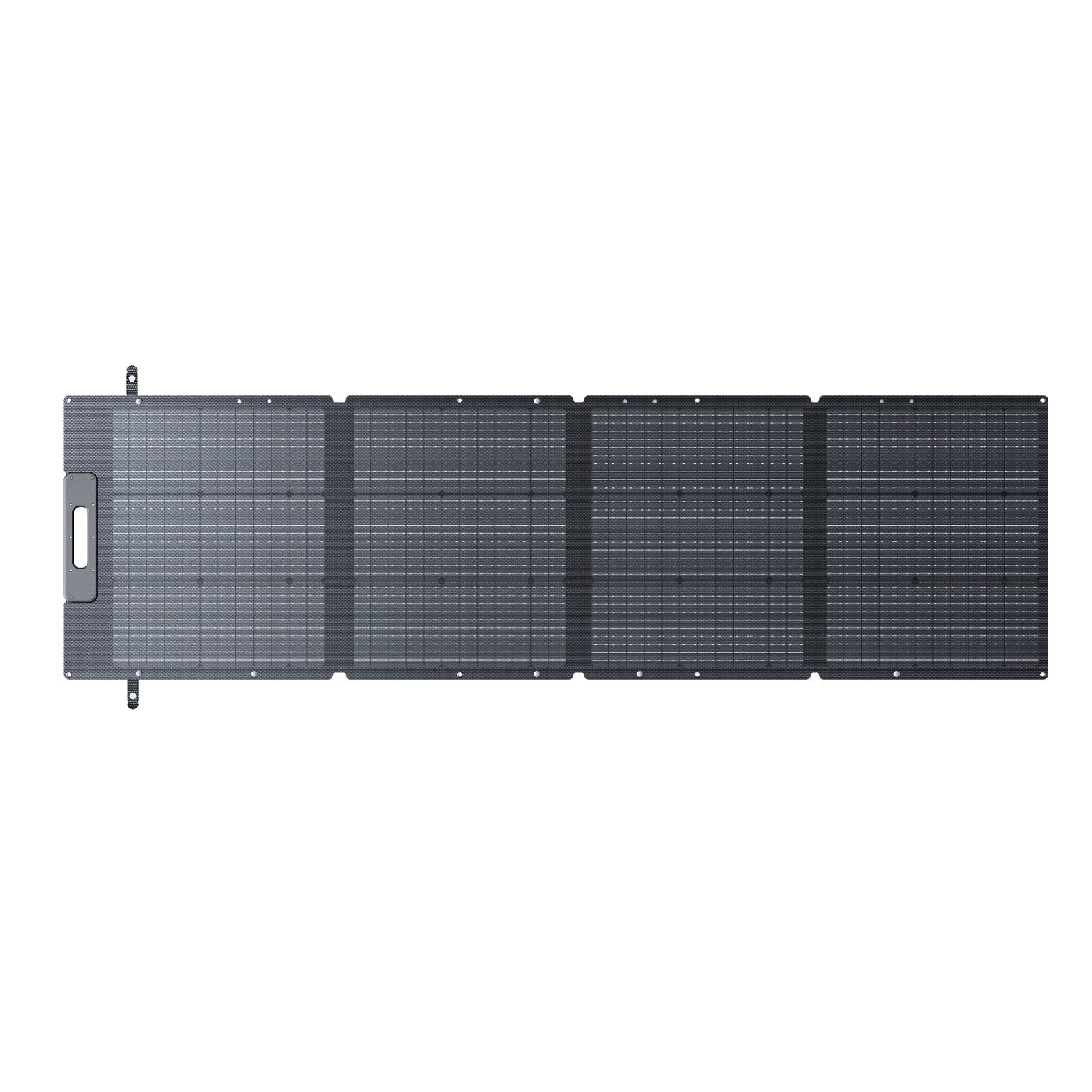
200 W · 17.15 lb · 24.6 V
$399
Price checked Aug 26, 2026
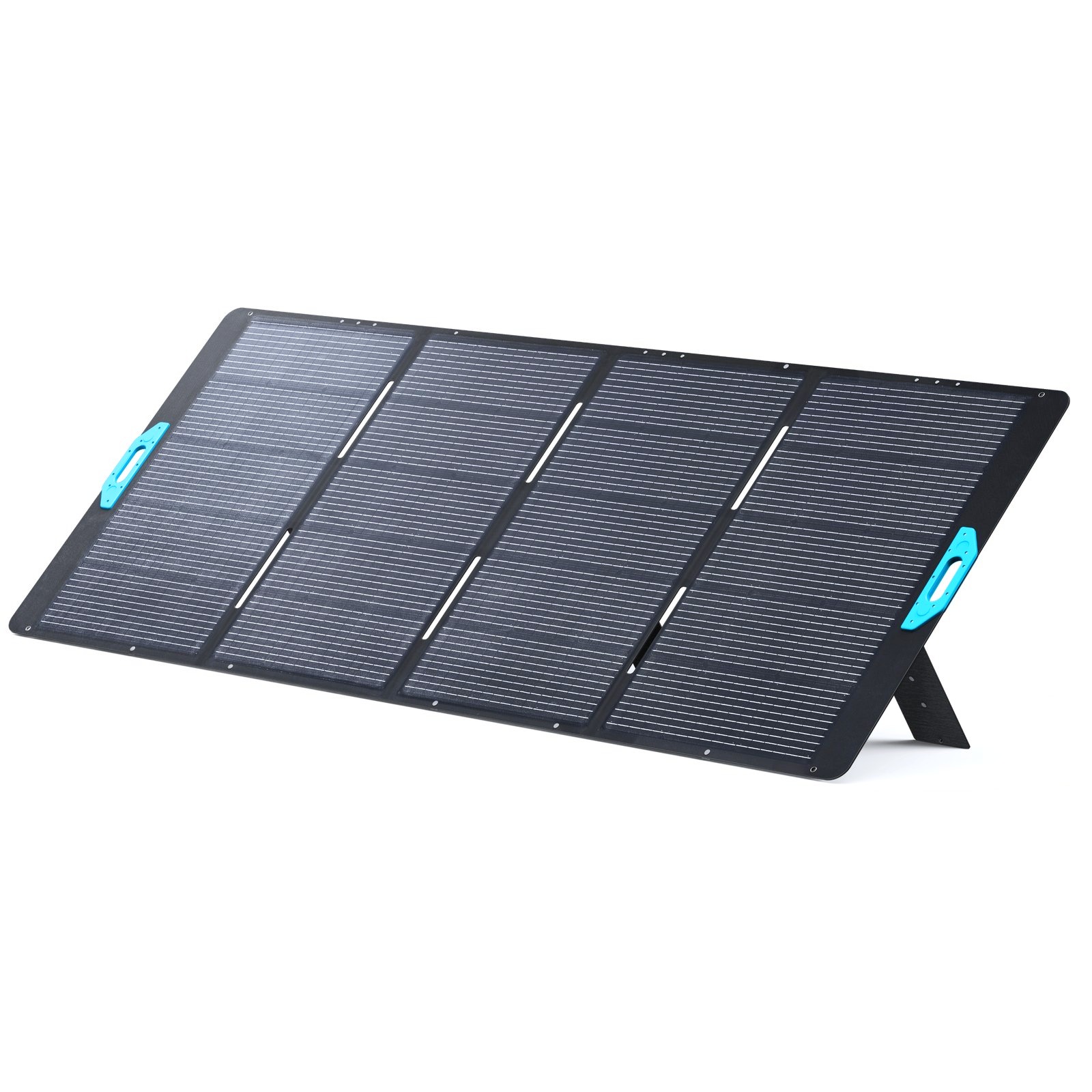
400 W · 35.3 lb · IP67
$699.99
Price checked Aug 26, 2026
Product photographs are the manufacturers’ own studio shots, used as supplied. Specifications and prices come from their US product pages, checked August 26, 2026.
| Model | Rated output | Weight | Weather sealing | Price |
|---|---|---|---|---|
| SolarSaga 200W, opens in a new tab Jackery | 200 W | 14.33 lb | IP68 | $379 |
| 200W Portable Solar Panel, opens in a new tab BLUETTI | 200 W | 17.15 lb | $399 | |
| PS400, opens in a new tab Anker SOLIX | 400 W | 35.3 lb | IP67 | $699.99 |
The one warning worth repeating: open-circuit voltage is the spec that ends charge controllers. Series wiring adds voltage, parallel adds current, and cold adds a little more voltage right when the day looks its best. The SP200L prints 24.6 V plainly, and you should still check it against your station before doubling up. The SolarSaga 200W and the PS400 carry dashes because their makers’ pages never agree on a figure. A dash means read the live page before you buy jumper cables, and if you can’t find a number you trust, one matched panel is the whole plan.
Explorer owners start here, and usually finish here too. As listed: 200 watts of daylight, a one-hand 14.33-pound carry, sealed to IP68, $379 that day ($429 listed). The job is the pleasant kind of chore: unfold with your coffee, click the cable into the Explorer 2000 Plus, aim twice before lunch, fold before errands. Voltage is a dash in our table, so no series experiments on a reseller’s say-so. Full review · See tonight’s price at Jackery →
AC200L owners, this is your matched folder, and the one panel here whose paperwork you can actually finish: 200 watts, 17.15 pounds, $399, with a plainly printed 24.6-volt figure that turns the series math into something you can do at the kitchen table. (Its weather-sealing cell is the dash on this card, because BLUETTI never states one cleanly.) Still a one-person carry, still a one-trip setup. Full review · station: AC200L · See tonight’s price at BLUETTI →
When a 200-watt folder genuinely undershoots your daylight needs, and you’ve made honest peace with 35.3 pounds, the PS400 doubles the glass: 400 watts, sealed to IP67, $699.99, voltage a dash. The homework matters twice as much here. Confirm the solar watt ceiling on your C2000 Gen 2 or F3800 first, because glass above the input’s ceiling is just expensive exercise. Full review · See tonight’s price at Anker →
Yield is weather wearing a spec sheet. A 200-watt folder in decent sun hands back somewhere between half and a full kilowatt-hour over a day. That’s genuinely useful against a two-night tank, and it is never the 200-times-eight of the advertisement. The PS400’s 400 watts won’t conjure three kilowatt-hours from a gray driveway either. Shade on one corner drags the whole panel down. Kickstands skate. Folding fabric catches exactly the gusts you’d expect it to. None of this is a flaw. It’s sunshine, being sunshine.
So match the panel to the station you already chose, and the job to the daylight you actually get. The Explorer’s tank pairs with the SolarSaga, the AC200L’s with the SP200L, and the Anker machines with the PS400 once the window checks out. A four-hour evening outage stays a battery purchase. A sunny multi-day event is where any of these three earns its keep. And sunless ice was always a watt-hours-or-engine question, refereed at battery vs standby.
Two panels? That’s a wiring project with one entrance exam: say whether you’re wiring series or parallel and why. If that sentence won’t come, one matched panel is the right answer, and a fine one. The buying guide teaches the exam gently. And sealing ratings (IP68 on the SolarSaga, IP67 on the PS400, a dash on the SP200L) cover water and dust, never hail and never thieves. Fold before the storm you can see coming.
No year of logged irradiance in a lab we own. These picks are the job, plus the family, plus the makers’ dated figures, read closely. Window-glass charging remains a demo. Specs dated August 26, 2026. The deeper homework: buying guide · the method: how we review.
The tanks these refill: the stations we’d buy · the category: portable solar panels.