Jackery Explorer 2000 Plus: the strong, steady one
Here’s the number I’d want a friend to know before anything else: 3,000 watts of steady output, 600 more than either rival in this class. The tank is the usual two nights of fridge (2,042.8 Wh), the weight is a park-it 61.5 pounds, and the extra battery has an actual name you can order. That headroom is the whole reason this machine exists, and it’s a good reason.

The short version
- The Jackery Explorer 2000 Plus holds 2,042.8 Wh, about two nights of fridge, and pushes 3,000 watts steadily, the strongest inverter in its class.
- It weighs 61.5 lb, grows with the named Battery Pack 2000 Plus, and cost $899 against a $2,199 list on August 26, 2026.
- One cell stays blank on purpose: Jackery never prints a single clean surge number, and we won't invent one for them.
Best overall
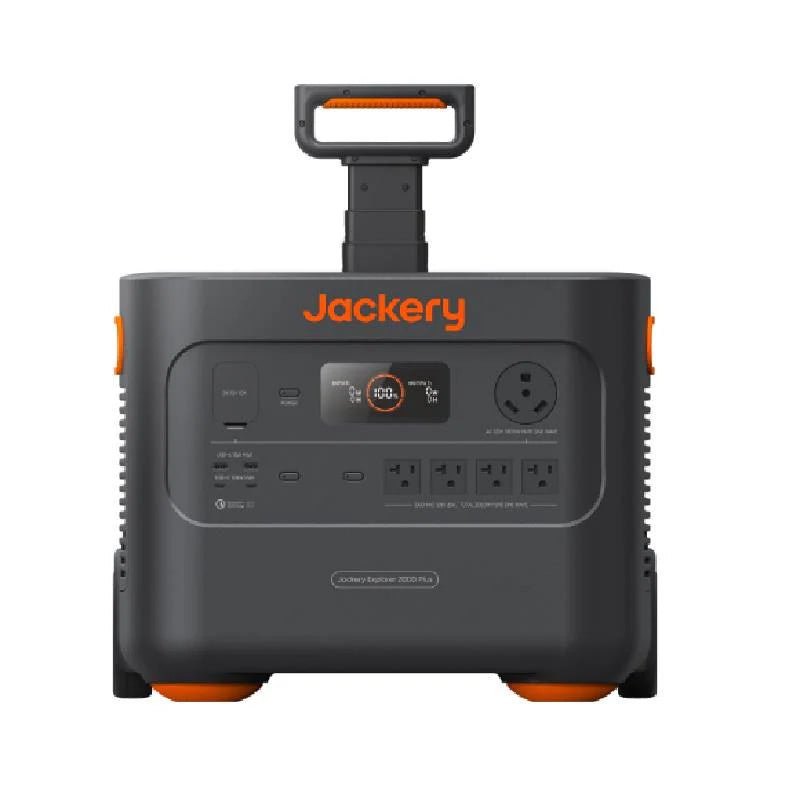
Jackery Explorer 2000 Plus
The strongest inverter in this class, and the one we would trust with a fridge and a microwave on the same night.
$899 $2,199
Price checked Aug 26, 2026
Lovely fit if
- The job is the fridge plus the rest of the kitchen’s small comforts, and you’d like room for the microwave to join without drama.
- You’re happy staying in the Jackery family: this machine, maybe the Battery Pack 2000 Plus later, and a SolarSaga panel for sunny refills.
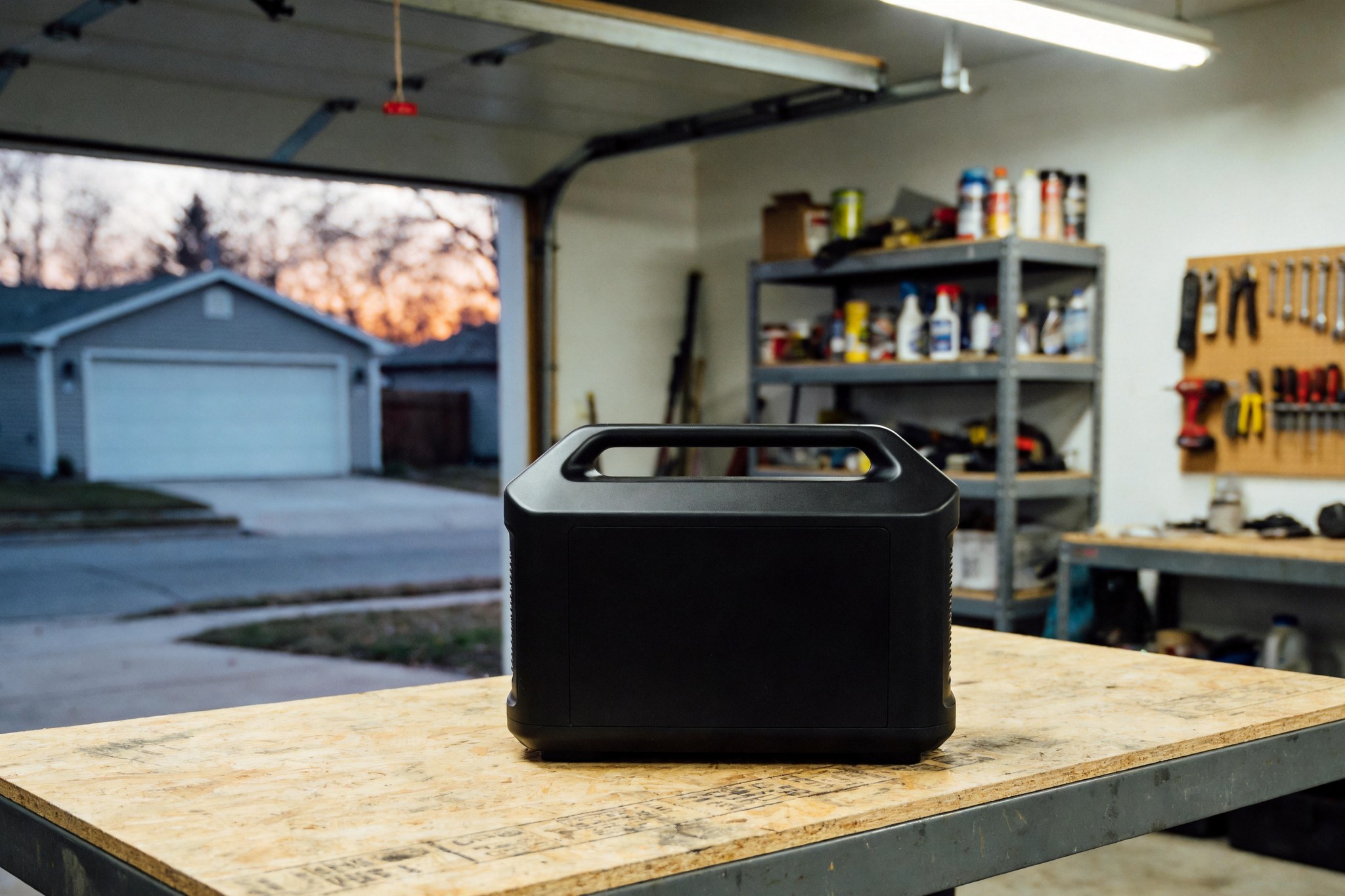
- The station will live on a floor with a cord run to it (61.5 pounds parks beautifully, and it does not backpack).
- You’ll run your own fridge-start test on a calm afternoon, the one experiment that beats every spec sheet.
Better served elsewhere if
- Anything on your must-list is 240 volts: a well, a dryer, some air handlers. This inverter is 120 V, and the Anker SOLIX F3800 is the one that speaks both legs.
- The whole house has to run itself for days. That’s a standby generator conversation.
- You’ll be carrying the station regularly: the C2000 Gen 2 does the same tank at 41.7 pounds, and your back will notice.
- Your plan is years of added 120-volt hours: the AC200L’s 8,192 Wh ceiling is the bigger attic.
The numbers, translated
Everything below comes off Jackery’s own US product page as of August 26, 2026, or the cell stays blank, because I checked and you’d want to know. The method lives at how we review.
- How much it holds. 2,042.8 Wh. Think of it as two nights of fridge, because a closed fridge naps between cycles and only actually runs a third of the time. Add the internet and some lamps and you’re still comfortably into tomorrow. Add a space heater and you’re done by bedtime. The full math sits in the buying guide.
- Steady output. 3,000 watts, the roomiest inverter of the three, and the reason a fridge and a microwave burst can share this machine without anyone flinching. (It’s still 120 volts. Headroom is not a second hot leg.)
- Surge. Left blank, and honestly so: Jackery’s pages never settle on a single figure, so we won’t pick one for them. Every station here shrugs off a fridge compressor’s wake-up grunt in practice, but test yours once, gently, in daylight.
- Weight. 61.5 pounds, within a pound of the BLUETTI, twenty over the Anker. Plan a home for it on the floor near the kitchen. The wheels and the handle are for hallways, not staircases.
- Voltage. 120 V. Extra battery packs deepen the tank. They never add the missing leg a well pump is waiting for.
- Battery type. LiFePO4, the patient chemistry, happy to wait out the quiet months and then work a storm.
- Room to grow. The Battery Pack 2000 Plus, named because Jackery names it. No ceiling figure appears on the page we snapshotted, so none appears here. Check stock the week you buy.
- Price. $899 that day, with $2,199 shown crossed out beside it. The sale price is real. The strikethrough is theater. Buy the machine for its inverter, not its discount.
What it can actually run on a dark night, and the two loads that will disappoint you, lives at stations for home backup. The family-versus-family view is Jackery vs BLUETTI vs Anker SOLIX.
Where it lives in a house
At 61.5 pounds this is a floor machine, and that’s a feature once you accept it: a dry corner of the kitchen, the hallway closet, the garage with a rated cord snaking to the fridge. The telling detail is the wheels. They roll beautifully across a floor and mean nothing on stairs, so if your outage plan involves a second story, the lighter C2000 Gen 2 is the kinder buy. And if your plan is really about adding hours year over year, the AC200L’s expansion story reads better. This machine’s argument is muscle now, not attic space later.
Use that muscle wisely and the tank lasts. A closed refrigerator, the internet, some lamps, the microwave as a tool rather than a lifestyle. That’s a night that barely dents 2,042.8 Wh. Resistance heat is the one villain. Fifteen hundred watts of space heater turns two days of fridge into one short, warm evening. Outlet counts and UPS switchover times weren’t in our dated snapshot, so I won’t recite them from memory. The live page has them, and it’s worth the look if a computer depends on the handoff.
Refilling it, and the SolarSaga question
Between grid flickers, the wall does the refilling. Jackery’s charge-rate numbers weren’t among our dated fields, so read the live page if a same-day top-up matters to your plan.
For sunshine, stay on the family cable. The matched folder is the SolarSaga 200W: 200 watts of daylight, a genuinely pleasant 14.33-pound carry, sealed to IP68, and $379 (listed at $429) on August 26, 2026. Its open-circuit voltage cell is blank in our table, because Jackery’s own pages never agree on one figure, which I find a little funny for a company this large. So don’t series-wire on a guess. Cold, bright mornings push panel voltage up; one matched panel into the intended port is the plan that never needs an apology.
Honest expectations: a 200-watt folder puts a real dent in this tank on a sunny June day and a modest one through November haze. Overnight outages are the battery’s job alone. Multi-day events are battery plus panel plus a closed fridge door. The gentle math lives in the panel buying guide, and the full panel shortlist at best portable solar panels. The category itself is portable solar panels.
$899 at Jackery, opens in a new tab
Price checked Aug 26, 2026
What we’re not claiming
Nobody here has torn this machine down after a season in a lab we own. This review is the job it fits plus the maker’s own dated figures, read closely. Firmware, extra-pack stock, and sale prices all wander. EcoFlow isn’t featured here (its affiliate window is usually quoted at 7 days, a poor fit for how long people honestly deliberate). Tesla Powerwall and rooftop solar live on other sites.
If you buy after following a link here, we may earn a small commission. Your price doesn’t change. Disclosure · corrections · privacy.
The fit line, then. If the station has to be carried, get the C2000 Gen 2 and don’t look back. If the future holds 8,000 watt-hours of quiet 120-volt evenings, the AC200L is your attic. And if anything in the house hums at 240 volts, it’s the F3800, full stop. For everyone else, meaning the household that just wants the strongest inverter in the class minding the fridge, this is the one, and it wears the job well. The full class picture: best portable power stations · the power station category.